

Harassment Prevention Training Is Not Optional!
Zachary M. Schwartz • September 24, 2025
Legislative Updates: The following is a summary of the primary State legislative actions impacting California employers, each of which took effect January 1, 2026, unless otherwise stated. Please note, these descriptions are summaries only and are not intended to provide a complete description of each new law. Please contact our office should you have any questions. California Hourly Minimum Wage and Exempt Salary Minimum: Effective January 1, 2026, the state minimum wage increased to $16.90 per hour regardless of the number of employees working for the employer. The new minimum wage also raised the minimum salary required for an otherwise qualified employee to be classified as exempt to $1,352 per week, or $70,304 per year. As a reminder, in order to qualify as exempt, employees must be paid not less than these amounts and their job duties must satisfy the applicable duties test. Employers are advised to review the wage rate of all hourly and salary employees to ensure compliance with these increases. Local ordinances, such as those that apply to employees who perform work in at least 40 California cities and counties, including San Francisco, Los Angeles and Pasadena, mandate a higher minimum wage with scheduled changes that may have taken effect as of July 1, 2025. Please note, the state minimum salary requirement for exempt status does not change based on local ordinances. In addition, certain fast food workers must be paid a minimum of $20.00 per hour. Certain healthcare workers must be paid a minimum of $24.00 per hour through June 30, 2026, then $25.00 per hour beginning July 1, 2026 through December 31, 2027. SB 294: Workplace “Know Your Rights” Act Notices Effective February 1, 2026, and annually thereafter, employers must provide all employees with a stand-alone written “Know Your Rights” notice. The notice must be distributed to all current employees by February 1, 2026, and to all new hires at onboarding. It must be sent using the employer’s usual method of employee communication and received by employees within one day. The notice must address several required topics, including workers’ compensation benefits (disability pay and medical care for work-related injuries or illnesses), immigration-related rights (including rights related to immigration inspection notices and protections against unfair immigration-related practices), labor rights (including the right to organize a union and engage in concerted activity), and constitutional rights during law-enforcement interactions, such as freedom from unreasonable searches and seizures, due process rights, and protection against self-incrimination. The notice must be provided in the language normally used for work-related communications and in a language the employee understands. In addition, by March 30, 2026—or at hire going forward—employers must provide employees with the opportunity to designate an emergency contact. Employers are required to notify the designated person if the employee is arrested or detained at the worksite, or if the employee is arrested or detained while performing job duties off-site. The Labor Commissioner has issued template notices, available at https://www.dir.ca.gov/dlse/Know-Your-Rights-Notice/Know-Your-Rights-Notice-English.pdf , and educational videos will be released by July 1, 2026. Employers should also be aware that the annual notice must include a summary of material workplace-law developments, as determined by the Labor Commissioner. To comply, employers should distribute the written notice to all employees by February 1, 2026, in the appropriate language. By March 30, 2026, employers should revise emergency contact designation forms to include employee authorization for contact in the event of arrest or detainment, establish a protocol for contacting designated persons, train managers and supervisors on their notification obligations, and update onboarding materials to include both the annual “Know Your Rights” notice and the emergency contact designation form. AB 692: Employment Contract Restrictions Effective January 1, 2026, AB 692 restricts employers from including certain repayment obligations in employment-related contracts. The law targets provisions that require employees to repay debts solely because their employment ends and was enacted to address public-policy concerns that such repayment provisions can improperly restrict employee mobility and the ability to engage in a lawful profession, trade, or business. Under AB 692, employers may not include terms that require an employee to pay or reimburse an employer, training provider, or debt collector, or to repay a debt that is triggered by termination or separation from employment. This prohibition broadly applies to provisions that impose penalties or fees, create repayment obligations of any kind, or authorize debt collection based solely on an employee’s separation from employment. The law does include limited, narrowly defined exceptions. One exception applies to transferable credential tuition costs, but only if all statutory conditions are met. These include that the agreement is separate from the employment contract, the credential is not required for the employee’s current position, the repayment amount does not exceed the employer’s actual cost, repayment is prorated without acceleration, and repayment is not required if the employee is terminated, unless the termination is for misconduct. Another exception applies to discretionary payments or bonuses, such as sign-on bonuses not tied to job performance. To qualify, the repayment terms must be set forth in a stand-alone agreement, the employee must be informed of the right to consult an attorney and given at least five business days to consider the agreement, repayment must be prorated over a retention period of no more than two years with no interest accruing, the employee must have the option to defer receipt of the payment until the end of the retention period, and repayment may be required only if separation is at the employee’s sole discretion or due to misconduct. AB 692 also preserves additional statutory exceptions, including government loan assistance or forgiveness programs, approved apprenticeship programs, and certain residential property transactions. To prepare for compliance, employers should review and update employment contracts and workplace practices, audit all existing employment agreements, incentive and bonus plans, and training or tuition-related agreements, and remove or revise any provisions that may violate AB 692. For agreements that may qualify under an exception, employers should ensure they are clearly separate from employment agreements, confirm that all statutory conditions are strictly met, and update onboarding and training procedures to align with AB 692 and reduce compliance risk going forward. SB 513: Personnel Records: Training and Education SB 513 amends Labor Code section 1198.5 by expanding the definition of “personnel records” to expressly include employee education and training records. Employers that maintain training or education records must ensure those records include the employee’s name, the trainer’s name, the date and duration of the training, the core competencies covered, and any resulting certification or qualification. Employers must respond to requests to inspect or copy personnel records within 30 days, or 35 days if extended by written agreement. Failure to comply may result in a $750 statutory penalty, injunctive relief, and attorneys’ fees. SB 590: Paid Family Leave for Designated Persons Effective July 1, 2028, SB 590 expands California Paid Family Leave (PFL) by broadening the definition of “family” to align with CFRA’s “designated person” concept. Under this law, a designated person may be someone related by blood or someone equivalent to a family relationship. Unlike CFRA, employees must identify the designated person at the time they file a PFL claim and must attest under penalty of perjury that the relationship qualifies. Employees may designate only one person per 12-month period. The structure and duration of PFL remain unchanged, and eligible employees are still entitled to up to eight weeks of wage replacement per 12-month period. AB 406: Expansion of Workplace Protections for Crime Victims AB 406 further expands the permitted uses of paid sick and safe time under the Healthy Workplace Healthy Families Act. Effective January 1, 2026, employees may use paid sick and safe time when they or a family member are victims of certain crimes and are attending judicial proceedings, including delinquency proceedings, post-arrest release decisions, pleas and sentencing hearings, post-conviction release proceedings, or any proceeding where a victim’s rights are at issue. For these purposes, a “victim” includes individuals affected by violent felonies, serious felonies, felony theft, embezzlement, and a broad range of other crimes such as felony domestic violence, sexual assault, felony stalking, felony DUI causing injury, and hit-and-run incidents. These changes build on earlier expansions that already incorporated crime-victim and family-member safe time. In addition, effective October 1, 2025, paid sick and safe time expressly includes circumstances where an employee appears in court as a witness pursuant to a subpoena or court order or serves on an inquest or trial jury. SB 642: Pay Transparency and Pay Data Effective January 1, 2026, SB 642 expands California’s pay transparency requirements. Employers must disclose the pay scale to applicants upon hire and in job postings, and the “pay scale” must now reflect a good-faith estimate of expected pay at hire, not merely a broad range. The law also expands equal pay protections by prohibiting wage disparities based on “another sex,” explicitly including non-binary genders. For pay-equity analysis, the definition of “wages” is expanded to include bonuses, stock and stock options, allowances (such as gas allowances), hotel accommodations, travel reimbursements, and other forms of compensation. Employers must therefore evaluate total compensation, not just base pay, when assessing pay equity. SB 464: Pay Data Reporting Changes SB 464 modifies California’s annual pay data reporting obligations for employers with 100 or more employees or 100 or more labor-contractor workers. Beginning January 1, 2026, demographic pay data must be maintained separately from personnel records. In addition, starting with the 2026 reporting year (reports due May 2027), employers must report pay data using 23 Standard Occupational Classifications rather than the current 10 EEO-1 categories. Penalties for noncompliance increase to up to $100 per employee for an initial failure to file and up to $200 per employee for subsequent failures. SB 648: Tips (Gratuities) Enforcement Effective January 1, 2026, SB 648 expressly authorizes the Labor Commissioner to investigate tip-related complaints, issue citations, and bring civil enforcement actions. Existing tip rules remain in effect: tips belong to the employees who receive them, tip skimming is prohibited, tips may not be used as a credit toward wages, and credit-card tips must be paid by the next regular payday without deductions for processing fees. Tip pooling remains permissible only if pool participants are reasonably defined, the distribution formula is fair and reflective of service contributions, and managers, supervisors, and agents are excluded. Violations may result in penalties of $100 per employee for an initial violation, $250 per employee for subsequent violations, and restitution of improperly withheld gratuities. SB 303: Bias Mitigation Training Safe Harbor SB 303 provides a safe harbor for employers that implement bias-mitigation training programs. An employee’s good-faith assessment, testing, admission, or acknowledgment of personal bias, when made in good faith and as part of a bias-mitigation training, does not by itself constitute unlawful discrimination. This law is intended to encourage employers to adopt robust bias-mitigation training without fear that good-faith participation or admissions will later be used as evidence of discrimination. SB 617: Updated Cal-WARN Notice Requirements SB 617 updates California’s Worker Adjustment and Retraining Notification Act (Cal-WARN), which applies to employers with as few as 75 employees and is more stringent than federal WARN. Cal-WARN requires at least 60 days’ advance notice for plant closures, mass layoffs of 50 or more employees regardless of workforce percentage, or relocations of 100 miles or more. Effective January 1, 2026, Cal-WARN notices must include additional information, such as whether the employer will coordinate services through a local workforce development board, contact information for that board with required explanatory language, CalFresh program details, and the employer’s contact information. If an employer elects to coordinate services, those arrangements must be made within 30 days of issuing the notice. AB 250: Revival of Sexual Assault Claims Effective October 13, 2025, AB 250 creates a two-year revival window—from January 1, 2026 through December 31, 2027—for certain sexual assault claims against private employers that would otherwise be time-barred. To revive a claim, the employer must have legal responsibility for the damages, and there must have been a “cover-up” or attempted cover-up, defined as a concerted effort to hide evidence of sexual assault that incentivizes silence. For example, a claim reported in 2010 may be revived during the window if the employer attempted to suppress the complaint through inducements. Automated Decision-Making Systems Under FEHA Final regulations issued by the California Civil Rights Council clarify how FEHA applies to automated decision-making systems in employment. These systems include tools used for resume screening, hiring or promotion assessments, interview analysis, and targeted job advertising. Employers remain fully responsible for discrimination resulting from automated systems, even when decisions are influenced by AI, algorithms, or third-party vendors. It is unlawful to use automated systems that discriminate based on protected characteristics or create an unjustified adverse impact, and such systems may not replace required individualized assessments, including criminal history or accommodation analyses. Employers must retain automated decision-making data for at least four years, maintain demographic data separately from personnel files, preserve data during CRD investigations, and ensure automated tools do not function as unlawful medical or psychological inquiries or rely on proxies closely correlated with protected characteristics. Honorable Mentions In a September 30, 2025 opinion letter, the U.S. Department of Labor clarified that employers must calculate available FMLA leave based on an employee’s actual, normally scheduled workweek, including any mandatory overtime. Voluntary overtime hours, however, should not be included in the FMLA calculation. Effective January 1, 2026, SB 809 requires employers to indemnify employees for all necessary expenses or losses incurred when using a personal vehicle for work, and it further requires reimbursement for the use, maintenance, and depreciation of a personally-owned commercial vehicle used for work. The law also clarifies that merely owning a vehicle used to provide labor or services does not, by itself, establish independent-contractor status. Effective January 1, 2026, California amends the Labor Code to extend the ABC test exemption for licensed estheticians, electrologists, manicurists, barbers, cosmetologists, and commercial fishermen through January 1, 2029, pursuant to Assembly Bill 1514. Effective January 1, 2026, California law prohibits management agreements between physician or dental practices and private equity or hedge fund entities from including noncompete clauses that restrict a provider’s ability to compete after resigning from or being terminated from the practice, pursuant to Senate Bill 351. REMINDERS 2 026 IRS Standard Mileage Reimbursement Rate Each year, the IRS adjusts the IRS Standard Mileage Reimbursement Rate for business travel. For 2026, the rate increased 2.5 cents per mile, from 70 cents to 72.5 cents per mile driven for business travel. Reimbursement at the IRS Standard Mileage Rate is presumed by law to constitute payment in full for the business use of an employee’s personal vehicle (including fuel, insurance, maintenance, repairs, etc.). Therefore, employers are strongly advised to always reimburse employees at this rate (or more, but not less) for all business-related mileage driven in the employee’s personal vehicle. PAGA Reform California’s Private Attorneys General Act (PAGA) has plagued employers for two decades. In 2024, important reforms to PAGA have been enacted that offer significant reductions in potential liability for employers that choose to take advantage of options that are now available to them. Before these reforms, employers were subject to penalties of $200 per employee per pay period for almost any wage and hour violation, such as providing meal periods that were even one minute short, requiring employees to remain onsite during paid rest breaks, and not paying overtime at the “regular rate,” which includes any bonus payments. Employers that thought they were paying their employees accurately and even generously were hit hard. At long last, PAGA reform legislation was enacted, and went into effect immediately, on July 1, 2024, which provided some relief to employers. Most importantly, the reforms provide options for employers to preemptively and exponentially reduce potential PAGA penalties by taking “all reasonable steps to comply” with wage and hour laws before an employee threatens to, or actually does, bring a claim against the company. “All reasonable steps” includes implementing good written policies, conducting payroll audits and taking action in response to the results of the audit, training supervisors/managers on Labor Code and Wage Order compliance, and taking appropriate corrective action against supervisors/managers who do not comply. Employers are encouraged to work with employment law counsel to ensure they are taking “all reasonable steps,” thereby exponentially lowering their risk. Mandatory Workplace Violence Prevention Plan As of July 1, 2024, California employers were required to implement a comprehensive, customized Workplace Violence Prevention Plan (WVPP). The WVPP must include a comprehensive written policy, must designate the individuals responsible for leading its implementation, involve employees in its development and implementation, provide for the training of all employees, and more. Employers are also required to record every workplace violence incident (as defined in the law) in a designated “violence incident log,” which must include very specific information on each incident. The WVPP rules also provide for the issuance of a restraining order based on actions such as harassment, intimidation, phone calls (e.g., repeated calls or text messages), in addition to either threatened or actual violence. As of January 1, 2025, the victim of such acts may request not to be named. 2026 Computer Software Professionals Minimum Pay for Overtime Exemption Effective January 1, 2026, the minimum compensation rates for certain computer software employees who qualify for this overtime exemption are $58.85 per hour, $10,214.44 per month or $122,573.13 per year, reflecting a 3.3% increase based on the California Consumer Price Index (CPI). In order to qualify for this overtime exemption, computer software professionals must be paid not less than these amounts and their job duties must satisfy the applicable duties test. 2026 Licensed Physicians and Surgeons Minimum Pay for Overtime Exemption Effective January 1, 2026, the minimum hourly compensation rate for exemption from overtime for certain licensed physicians and surgeons will increase to $107.17 per hour, reflecting a 3.3% increase based on the California Consumer Price Index (CPI). Case Notes •Iloff v. Bridgeville Properties, Inc. (2025) – The California Supreme Court held that a property owner could not avoid liquidated damages for minimum-wage violations based on “good faith” where it made no actual effort to comply with wage laws, clarifying that good faith requires concrete compliance steps rather than ignorance or subjective intent, and further ruling that employees may assert paid sick leave claims during an employer’s appeal of a Labor Commissioner decision even if those claims were not initially addressed. To invoke good faith, an employer must demonstrate reasonable effort to comply with the law, not merely lack of knowledge. •Kruitbosch v. Bakersfield Recovery Services (2025) – The court held that, although a co-worker’s alleged sexually harassing conduct was insufficiently related to the workplace to be imputable to the employer under FEHA, an employer may create a hostile work environment through its inaction and mocking, dismissive, or indifferent response to a harassment complaint which altered the work environment in an objectively severe manner. Even when the underlying misconduct occurs off duty, making clear that employer inaction and ridicule—rather than the off-duty conduct itself—can independently give rise to liability. •Carranza v. City of Los Angeles (2025) – The Court of Appeal affirmed a $4 million verdict against the City of Los Angeles, holding that secondhand knowledge of harassment can constitute severe and pervasive harassment under the FEHA. Here, a nude look-alike photo of the employee was circulated among coworkers. The employee requested the LAPD intervene to clarify the photo was not her and they refused. Although no one directly harassed her, an employer may still be liable for a hostile work environment when it failed to take affirmative, visible action to stop known digital sexual harassment—such as the on-duty circulation of a false, sexually explicit image—even where management fears that addressing the issue may further publicize it. •Noland v. Land of the Free, L.P (2025) – A California appellate court imposed sanctions and referred counsel to the State Bar after an attorney filed AI-generated appellate briefing containing fabricated authorities without verification, making clear that courts will not tolerate unverified generative AI work product and that attorneys remain fully responsible for independently reviewing and confirming all cited legal authorities. Employers should be cautious when relying on AI in the workplace. •Bradsbery v. Vicar Operating, Inc. (2025) – The California Court of Appeals confirmed the enforceability of written prospective meal period waivers for work shifts between five and six hours so long as there is no coercion, it is not unconscionable, employees are not discouraged from taking their meal periods to which they are entitled, it was signed knowingly, and could be freely revoked at any time. •Velarde v. Monroe Operations (2025) – The California Court of Appeal upheld an arbitration agreement that was presented to an employee alongside approximately 30 other onboarding documents, signed while an HR manager waited, and accompanied by misrepresentations regarding the agreement’s terms on which the employee relied. The Court found the agreement to be both procedurally and substantively unconscionable. Employers should be cautious in how arbitration agreements are presented to employees and ensure employees are given a meaningful opportunity to review the agreement, ask questions, and consult with counsel before signing. •Gurganus v. IGS Solutions, LLC (2025) – The California Court of Appeal affirmed that an arbitration agreement may be read in conjunction with another employment-related agreement executed at the same time. In this case, the employee received and signed an arbitration agreement alongside a confidentiality and non-disclosure agreement containing inconsistent and unconscionable terms. The Court held that because both the arbitration agreement and the confidentiality and non-disclosure agreement were signed on the same day as part of the same transaction, and both governed disputes arising out of the employee’s employment, they could be read together as a single, integrated agreement. When read together, the arbitration agreement was not mutually binding. •Hohenshelt v. Sup. Ct. (2025) – The California Supreme Court held that a late arbitration fee payment does not automatically result in forfeiture under Code of Civil Procedure section 1281.98 when the delay is due to mistake or excusable neglect, requiring courts to evaluate the circumstances rather than treating minor, non-willful delays as a “gotcha” waiver of arbitration rights. This bulletin is provided as a service to our clients and other friends to highlight current developments in the law. It is not intended to provide a legal opinion or specific legal advice. Should issues arise involving these matters, or other legal concerns, please contact this office to speak directly with an attorney. We look forward to working with you. WHAT WE DO – BEYOND ADVICE, COUNSEL, AND LITIGATION •Employment Law Comprehensive Guidebook – updated for 2026! https://employerlaw.myshopify.com/ •Employee Handbook Service •Harassment Prevention Training •Wage & Hour Audit – applicable to reducing PAGA penalties! •Workplace Violence Prevention Plans & Training Materials
“ICE Is Here!”—What Every California Business Needs to Know
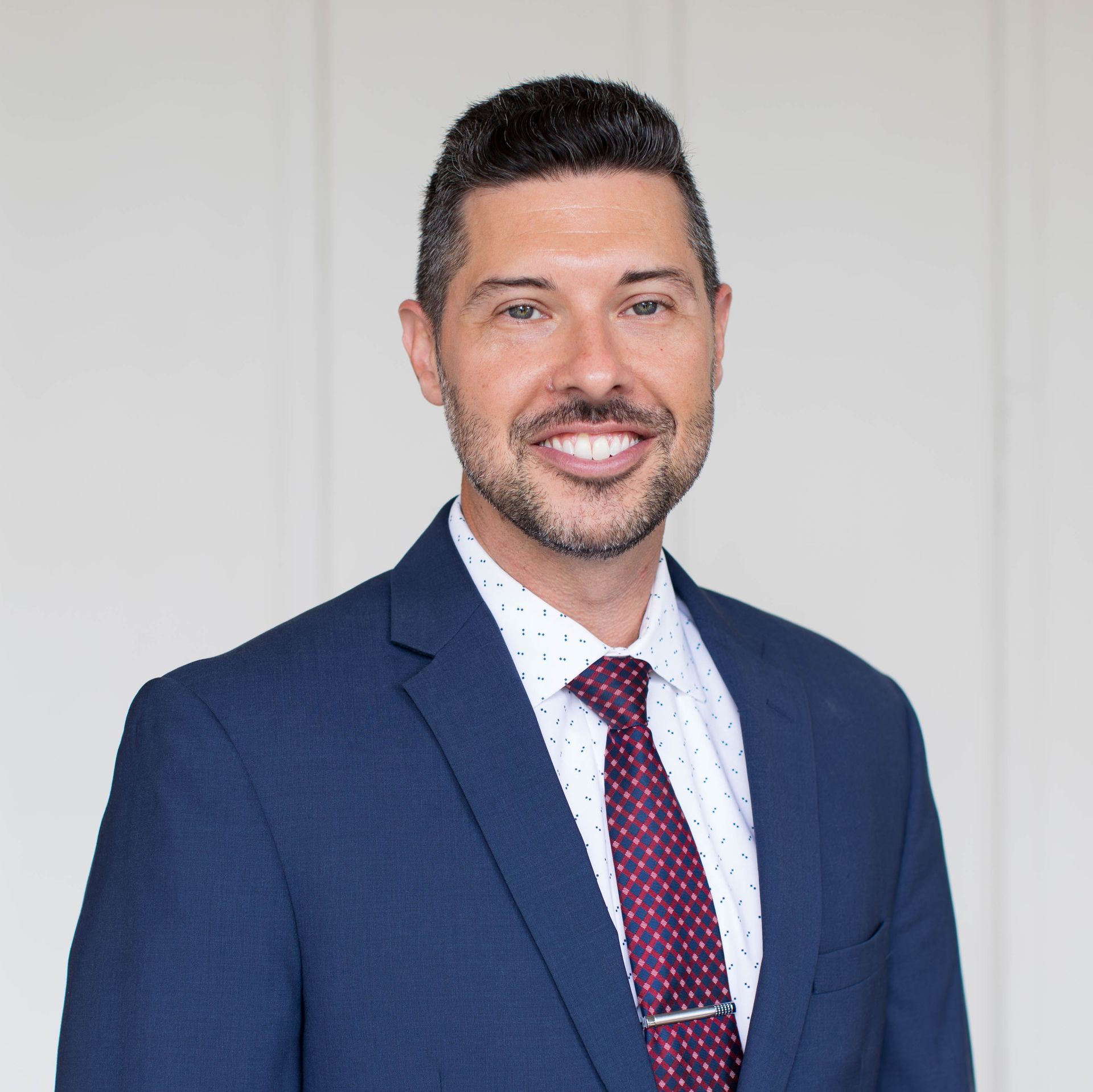
Scott & Whitehead is pleased to announce that Zachary M. Schwartz has joined the Firm.
As a reminder, effective July 1, 2024 , all California employers became obligated to implement a Workplace Violence Prevention Plan (WVPP) in compliance with Labor Code section 6401.9. This includes, in part: Maintaining a written WVPP specific to your workplace Logging any incidents of workplace violence Training all employees on workplace violence prevention Following recordkeeping requirements As we approach the one-year anniversary, employers must conduct an annual review of their WVPP , and provide training to all employees . To make compliance as easy and efficient as possible, Scott & Whitehead has developed a streamlined WVPP template that we can tailor to fit your business. We also offer customized training materials designed to be simple, effective, and easy for employers to implement without the need for ongoing outside help. We will fully prepare both your WVPP and the accompanying employee training materials for a flat fee of $2,000 . If you would like to get started or learn more about what’s required, please feel free to contact Michael Rossiter, or any of our other attorneys.
The U.S. Department of Homeland Security (DHS) has released a revised Form I-9 , which is now available on the U.S. Citizenship and Immigration Services (USCIS) website: uscis.gov/i-9 . While the new version is now in effect, employers may continue to use the prior edition until its expiration on July 31, 2026 . Key Updates to Form I-9 The updated form includes minor, but important, changes to reflect current legal requirements, including: Renaming the fourth checkbox in Section 1 to: “An alien authorized to work”; Revising descriptions of two List B documents in the Lists of Acceptable Documents; and Incorporating revised statutory language and an updated DHS Privacy Notice in the instructions. Reminder: In-Person Document Review Requirements Employers must physically inspect original identity and work authorization documents unless they are enrolled in E-Verify and meet the requirements for remote examination. Employers not enrolled in E-Verify are required to conduct in-person document reviews only. Remote review (even via live video) is not permitted . Employers may designate an authorized representative to complete Section 2 (or Section 3) of the Form I-9 on their behalf. Authorized Representative Guidance DHS guidance confirms that: An authorized representative may be any person designated by the employer, including a third party, agent, HR officer, or notary public (where allowed). Employers remain liable for any errors, omissions, or violations committed by their chosen representative. A notary public acting as an authorized representative is not acting in the capacity of a notary and should not use a notary seal when completing the Form I-9. Employees may not act as their own authorized representative under any circumstances. For more information on using authorized representatives and completing Form I-9, refer to the DHS guidance available at: uscis.gov/i-9-central . If you have questions or need assistance with Form I-9 compliance, please contact our office to speak with one of our employment law attorneys.
Have you received a request for employee payroll (or personnel) records? Have you received notice that an employee has filed or will file wage and hour claims such as for meal periods, rest breaks, overtime, business expenses and/or wage statements with the Labor and Workforce Development Agency or in court? IF SO, DO NOT DELAY IN CONTACTING EMPLOYMENT COUNSEL – THE CLOCK STARTS RUNNING ON YOUR OPTIONS TO REDUCE OR ELIMINATE LIABILITY AS SOON AS YOU RECEIVE NOTICE. Changes to California’ s Private Attorneys General Act (PAGA) include options for employers to greatly reduce potentially massive penalties BUT ONLY IF employers take specific actions within VERY TIGHT DEADLINES . Any delay in taking immediate action after receiving notice of wage and hour claims means missed opportunities to substantially reduce or eliminate penalties. Let us help you avoid PAGA pitfalls and penalties. Call us today and we will explain the options and the timelines.
Legislative Updates: The following is a summary of the primary State legislative actions impacting California employers, each of which took effect January 1, 2025, unless otherwise stated. Please note, these descriptions are summaries only and are not intended to provide a complete description of each new law. Please contact our office should you have any questions. California Hourly Minimum Wage and Exempt Salary Minimum: Effective January 1, 2025, the state minimum wage increased to $16.50 per hour regardless of the number of employees working for the employer. The new minimum wage also raised the minimum salary required for an otherwise qualified employee to be classified as exempt to $1,320 per week, $5,720 per month, or $68,640 per year. As a reminder, in order to qualify for as exempt, employees must be paid not less than these amounts and their job duties must satisfy the applicable duties test. Employers are advised to review the wage rate of all hourly and salary employees to ensure compliance with these increases. Local ordinances, such as those that apply to employees who perform work in at least 40 California cities and counties, including San Francisco, Los Angeles and Pasadena, mandate a higher minimum wage with scheduled changes that may have taken effect as of July 1, 2024. Please note, the state minimum salary requirement for exempt status does not change based on local ordinances. In addition, certain fast food workers must be paid a minimum of $20.00 per hour. Certain healthcare workers must be paid a minimum of $23.00 per hour through June 30, 2025, then $24.00 per hour through June 30, 2026, then $25.00 per hour through December 31, 2027. SB 988: Independent Contractor Written Agreement The Freelance Worker Protection Act imposes new requirements on companies that engage any bona fide independent contractor (i.e., freelancers) who will be paid $250 or more, including: (a) the engagement must be by written agreement; (b) the due date of payment for services rendered must be stated in the written agreement or payment will be due within 30 days of the services by default; (c) the company must retain the written agreement for at least four years; and (d) discrimination or other adverse action against a contractor/freelancer who takes action to enforce these provisions is prohibited. SB 399: “Captive Meetings” Prohibited The California Worker Freedom From Employer Intimidation Act prohibits employers from subjecting, or threatening to subject, an employee to discharge, discrimination, retaliation, or any other adverse action if the employee declines to attend an employer‑sponsored meeting or participate in, receive or listen to any communication with the employer, its agents or representatives, regarding the employer’s opinion of any religious or political matter, including whether or not to support a labor organization/union . If the meeting is during work time, an employee who declines to attend must continue to be paid. An employer who violates will be subject to a civil penalty of $500 per employee, per violation in addition to other potential penalties. California business groups have sued to stop enforcement of SB 399, which remains in effect at the time of publication. Of note, the National Labor Relations Board (NLRB) handed down similar restrictions with respect to employer meetings regarding unionization in 2024. AB 2123: Expansion of Crime Victim Protections and Use of Paid Sick Leave Benefits California law extends time off and related protections to victims of certain crimes including domestic violence, sexual assault, stalking and other violent crimes. Family members of crime victims are also entitled to time off in some cases. AB 2123 expands these provisions in various ways: (a) provides for time off for both the crime victim and a family member who is supporting the crime victim; (b) an employer is required to provide reasonable accommodation if requested to provide for the safety of the employee while at work (such as carrying a cell phone at all times); (c) employers must provide notice of available leave and wage replacement programs (e.g., the use of paid sick leave benefits) at the time of hire, annually, and any time the employer becomes aware of an applicable circumstance; (d) an employer may limit a crime victim’s leave to 12 weeks, which runs concurrently with FMLA and CFRA; and (e) an employer may limit the family member of a crime victim’s leave to 5-10 days depending on the circumstances. Note, family member is defined to include a relative, domestic partner or other designated person. In addition, employees may use available paid sick leave benefits for time off due to (a) crime victim leave for both the crime victim and the family member who is supporting the crime victim, (b) required court appearances, and (c) jury duty. Of note, the DLSE has updated its California Paid Sick Leave FAQs: https://www.dir.ca.gov/dlse/paid_sick_leave.htm . Multiple employee handbook policies should be updated to provide for these changes. AB 1815: Race Discrimination – Hairstyles The CROWN Act prohibits discrimination based on appearances traditionally associated with people of certain races, including natural hairstyles like braids, dreadlocks and twists. The Act referred to traits “historically” associated with race. This amendment removes “historically” from the definition and clarifies the intention to prohibit discrimination against persons based on traits associated with race, including, but not limited to, hair texture and protective hairstyles . Employee handbook policies that were updated to include CROWN Act protections should be updated to remove any reference to “historically.” SB 1100: Discrimination: Driver’s License Employers may not require that employees have a driver’s license, and may not include within job advertising and other materials any statement requiring that applicants have a driver's license unless driving is a function of the job and the use of an alternative form of transportation, such as a taxi / rideshare or carpooling, bicycling or walking, would not be comparable in travel time or cost to the employer. Employers should review their job descriptions, advertisements, and postings to ensure they do not improperly require a driver’s license. AB 2123: Paid Family Leave Paid Family Leave (PFL) benefits are administered through the EDD as part of the State Disability Leave Insurance (SDI) program and are available to employees on leave for qualified reasons, such as baby bonding or caring for an ill or injured family member. Employers may no longer require that employees use accrued PTO or vacation benefits before receiving PFL benefits. Employee handbook policies that required the use of up to two weeks of PTO or vacation benefits before receiving PFL benefits should be updated to eliminate this requirement. SB 1137: Intersectionality and Combination of Protected Characteristics The California Legislature has declared that “Intersectionality is an analytical framework that sets forth that different forms of inequality operate together, exacerbate each other, and can result in amplified forms of prejudice and harm.” This amendment to existing law clarifies that discrimination due to any protected basis enumerated under various laws, including the Fair Employment and Housing Act and the Unruh Civil Rights Act, is prohibited and may be the basis of legal claims “not just because of one protected basis, but also because of the combination of two or more protected bases.” AB 3234: Social Compliance Audit and Child Labor Practices Posting In recent years, some companies have undertaken voluntary internal assessments intended to evaluate their operations for compliance with respect to issues such as equal pay, diversity, and fair labor practices, as well as social standards and ethical business practices. Such reviews are referred to as “social compliance audits.” An employer that voluntarily conducts such an audit is required to post a clear and conspicuous link on its website to a report detailing the findings of the employer’s compliance with child labor laws . While the report must contain certain, specified information, the required disclosures relate only to child labor. Findings on other issues assessed in the audit are not subject to this posting requirement. AB 2299: New Posting Requirement for Whistleblower Protections An addition to the already substantial employer posting requirements is the new model list of employees’ rights and responsibilities under the whistleblower law. The DLSE has prepared a model poster, which can be found at: https://www.dir.ca.gov/dlse/whistleblowersnotice.pdf . Employers that post the model list will have met its posting obligations of employees’ rights and responsibilities. Presumably, vendors that provide all-in-one posters (such as Compliance Poster Company) will include this information in updated posters for 2025. FEDERAL PREGNANT WORKERS FAIRNESS ACT Federal laws are generally largely irrelevant to California employers because state law is so much stricter. The 2023 federal Pregnant Workers Fairness Act (PWFA) seemed to follow this general pattern. But the EEOC issued PWFA regulations in April 2024 that should be of interest to California employers. For example, the regulations explain that where an accommodation due to pregnancy is obvious, such as allowing the employee to carry or keep water or food nearby, take extra bathroom breaks, sit or stand as needed, take extra breaks to eat or drink, and temporarily adjust start times due to morning sickness, the employer may not require healthcare provider documentation. In addition, the employer may not require healthcare provider documentation that it would not otherwise require of a non-pregnant employee. Overall, the PWFA regulations remind employers of the need to engage in the interactive process with employees, and extend reasonable accommodations unless the employer can truly demonstrate undue hardship. CALIFORNIA INDOOR HEAT REGULATIONS Cal/OSHA’s Outdoor Heat Illness Prevention regulations apply specifically to outdoor places of employment. As of July 23, 2024, Cal/OSHA’s new Indoor Heat Illness Prevention regulations apply to indoor workplaces in which the temperature may reach or exceed 82 degrees, such as restaurants, warehouses and manufacturing facilities. The new regulations require a written, customized Indoor Heat Illness Prevention Plan that sets forth heat prevention, training, compliance, reporting and emergency procedures, etc. Cal/OSHA’s website includes links to model indoor and outdoor heat prevention plans that employers can use as a template to customize as applicable to their workplaces. Note, federal OSHA has announced a proposed rule requiring that certain employers prepare and implement indoor and outdoor heat illness prevention plans. COUNTY OF LOS ANGELES – UNINCORPORATED AREAS ONLY: EXPANSION OF FAIR CHANCE ACT REQUIREMENTS The City of Los Angeles enacted the Fair Chance Act in 2016, which imposes significant restrictions on an employer’s right to inquire into an applicant’s criminal history and strict procedural requirements when an employer does inquire into and consider an applicant’s criminal history. California enacted a statewide Fair Chance Act the following year. In 2024, Los Angeles County expanded the procedural requirements for employers that hire in unincorporated areas of the county, and inquire into and consider an applicant’s criminal history, including mandatory language that must be included in all job postings, posting requirements, sequencing mandates with respect to what and when the employer can ask about criminal history, multiple assessment steps, mandatory written documentation and communications, etc. Employers who hire within the unincorporated areas of Los Angeles County should review their hiring procedures, especially in connection with any inquiry into or consideration of criminal history. REMINDERS: 2025 IRS STANDARD MILEAGE REIMBURSEMENT RATE Each year, the IRS adjusts the IRS Standard Mileage Reimbursement Rate for business travel. For 2025, the rate increased 3 cents per mile, from 67 cents to 70 cents per mile driven for business travel. Reimbursement at the IRS Standard Mileage Rate is presumed by law to constitute payment in full for the business use of an employee’s personal vehicle (including fuel, insurance, maintenance, repairs, etc.). Therefore, employers are strongly advised to always reimburse employees at this rate (or more, but not less) for all business-related mileage driven in the employee’s personal vehicle. PAGA REFORM California’s Private Attorneys General Act (PAGA) has plagued employers for two decades. In 2024, important reforms to PAGA have been enacted that offer significant reductions in potential liability for employers that choose to take advantage of options that are now available to them. Before these reforms, employers were subject to penalties of $200 per employee per pay period for almost any wage and hour violation, such as providing meal periods that were even one minute short, requiring employees to remain onsite during paid rest breaks, and not paying overtime at the “regular rate,” which includes any bonus payments. Employers that thought they were paying their employees accurately and even generously were hit hard. At long last, PAGA reform legislation was enacted, and went into effect immediately, on July 1, 2024, which provided some relief to employers. Most importantly, the reforms provide options for employers to preemptively and exponentially reduce potential PAGA penalties by taking “all reasonable steps to comply” with wage and hour laws before an employee threatens to, or actually does, bring a claim against the company. “All reasonable steps” includes implementing good written policies, conducting payroll audits and taking action in response to the results of the audit, training supervisors/managers on Labor Code and Wage Order compliance, and taking appropriate corrective action against supervisors/managers who do not comply. Employers are encouraged to work with employment law counsel to ensure they are taking “all reasonable steps,” thereby exponentially lowering their risk. MANDATORY WORKPLACE VIOLENCE PREVENTION PLAN As of July 1, 2024, California employers were required to implement a comprehensive, customized Workplace Violence Prevention Plan (WVPP). The WVPP must include a comprehensive written policy, must designate the individuals responsible for leading its implementation, involve employees in its development and implementation, provide for the training of all employees, and more. Employers are also required to record every workplace violence incident (as defined in the law) in a designated “violence incident log,” which must include very specific information on each incident. The WVPP rules also provide for the issuance of a restraining order based on actions such as harassment, intimidation, phone calls (e.g., repeated calls or text messages), in addition to either threatened or actual violence. As of January 1, 2025, the victim of such acts may request not to be named. 2025 COMPUTER SOFTWARE PROFESSIONALS MINIMUM PAY FOR OVERTIME EXEMPTION Effective January 1, 2025, the minimum compensation rates for certain computer software employees who qualify for this overtime exemption are $56.97 per hour, $9,888.13 per month or $118,657.43 per year, reflecting a 2.5% increase based on the California Consumer Price Index (CPI). In order to qualify for this overtime exemption, computer software professionals must be paid not less than these amounts and their job duties must satisfy the applicable duties test. 2025 LICENSED PHYSICIANS AND SURGEONS MINIMUM PAY FOR OVERTIME EXEMPTION Effective January 1, 2025, the minimum hourly compensation rate for exemption from overtime for certain licensed physicians and surgeons will increase to $103.75 per hour, reflecting a 2.5% increase based on the California Consumer Price Index (CPI). This bulletin is provided as a service to our clients and other friends to highlight current developments in the law. It is not intended to provide a legal opinion or specific legal advice. Should issues arise involving these, or other legal matters, please contact this office to speak directly with an attorney. We look forward to working with you.
New Options for Avoiding PAGA Claims Some Good News! Most years, the California Legislature hands down a plethora of new laws that negatively impact employers and increase the already high risk of liability in the Golden State. On very rare occasions, a new law comes along that actually benefits employers. At long last, the Legislature and Governor have enacted important changes to the California Private Attorneys General Act (PAGA), which offer significant reductions in potential liability for employers that choose to take advantage of these new options. History of PAGA By way of background, PAGA was enacted in 2004 and imposed huge potential monetary penalties on employers who did not cross every single “T” and dot every single “I” with respect to the hundreds of California wage and hour laws. The Legislature’s supposed intention was to encourage employers to do a better job of complying with these laws or risk very expensive fines and penalties. The reality, however, was that while “aggrieved employees” only received a very nominal percentage of these monies, a fertile cottage industry was created by which plaintiffs’ attorneys got rich (or richer) and the State’s coffers were exponentially increased, all at the expense of California employers of every size and type. No one was immune. In short, PAGA allowed almost any current or former employee to hire an attorney (at no cost to the employee) to file a lawsuit seeking PAGA penalties on behalf of every employee and former employee in the prior 12 months, not just the individual employee. The typical PAGA lawsuit alleged that the targeted employer violated multiple legal mandates, such as failing to provide all, fully compliant rest breaks, failing to provide all, fully compliant meal periods, failing to provide pay stubs with all the required, fully accurate information, failing to properly pay non-exempt employees, and many other such claims. Under PAGA, employers were subject to penalties of $200 per employee per pay period for each such violation. By way of example, an employer with just five employees that paid employees every two weeks could be sued for about $24,000 for meal period violations plus $24,000 for rest break violations plus $24,000 for pay stub violations plus several other penalties, interest and attorneys fees. To illustrate who this law really benefited, and assuming just one $24,000 penalty, the attorney would typically receive approximately $10,000, the State would typically receive approximately $10,000 and the remaining $4,000 would be divided among the five employees (approximately $800 to each), who were also responsible for paying taxes on the payments. Clearly, the attorneys and the State were the true beneficiaries of PAGA, not the employees and certainly not the employers. Hundreds of thousands of California employers were compelled to defend themselves against PAGA claims. Employers who thought they were paying their employees completely accurately, and even generously, were hit hard. For example, in your workplace, does every (non-exempt) employee get a 10-minute rest break mid-morning and mid-afternoon? Does every (non-exempt) employee begin their lunch break before they have finished the first five hours of work? If the answer to either question is “not always,” then that automatically means the company is liable for rest break, meal period and pay stub violations. Needless to say, PAGA has been a nightmare for California employers. The Anti-PAGA 2024 Ballot Initiative It took almost twenty years, but finally, employer groups banded together, raised over 30 million dollars, and succeeded in getting an initiative qualified for the November 2024 ballot that would have repealed PAGA and replaced it with a far more fair and balanced penalty scheme. Most notably, the initiative required that 100% of the penalties be distributed to the employees, and prohibited any portion of the penalties going to either the attorneys or the State. Of course, no one knew whether the initiative to repeal PAGA would pass in November, but the risk of losing scared the parties on every side of the issue enough to finally bring them together to reach a resolution. Thus, a PAGA compromise was born, molded, and eventually accepted on a bipartisan basis. PAGA reform legislation was enacted, and went into effect immediately, on July 1, 2024. The PAGA Compromise To be clear, PAGA remains a very real threat to the financial health of virtually every California employer. For example, PAGA penalties decreased from $200 per employee per pay period to $100 per employee per pay period, which is a very significant improvement, but even at $100 per employee per pay period per violation means that the threat of significant financial penalties is still alive and well. Most importantly, the PAGA compromise provides a vehicle for employers to preemptively and exponentially reduce potential PAGA penalties: If the employer has taken “all reasonable steps to comply” with the wage and hour laws before they ever receive a request for payroll records from a current or former employee (usually from a former employee or their attorney) or notice of a potential or actual lawsuit, the penalties may be reduced by 85% , or $15 per violation per employee per pay period instead of $100 per violation per employee per pay period. If the employer takes “all reasonable steps to comply” with the wage and hour laws after they receive a request for payroll records or notice of potential or actual lawsuit, but within 60 days of the request or notice, the penalties may be reduced by 70% , or $30 per violation per employee per pay period instead of $100 per violation per employee per pay period. In reality, most plaintiffs’ attorneys will be far less interested in any case in which the potential penalties have been reduced to only $15 or $30 per violation per employee per pay period. There just isn’t enough money in it for the attorney to want to take the case. So, what does “all reasonable steps to comply” mean? Under the new law, it includes: Distributing and implementing lawful written policies; Conducting periodic payroll audits and taking prompt action in response to the results of the audit; and Training all supervisors on applicable Labor Code and Wage Order compliance, and taking appropriate corrective action against supervisors who do not comply. Act Now, Do Not Wait! California employers are strongly encouraged to take advantage of this opportunity to get their wage and hour houses in order, sooner rather than later. Work with one of our highly qualified employment attorneys to: (1) ensure that you have current, fully compliant, well-written policies; (2) conduct a payroll audit in order to identify and correct any potential violations; and (3) train yourselves, as well as any leads, supervisors, managers, and any others who may assist you with payroll. It is not often that California employers get a break from the Legislature. Take advantage of this one and act now, do not wait!
Scott & Whitehead can help you meet your obligations to develop and implement a compliant Workplace Violence Prevention Plan. To get a customized Workplace Violence Prevention Plan and training program for your particular business, please call us.
Legislative Updates: The following is a summary of the primary State legislative actions impacting California employers, each of which will take effect January 1, 2024 except as otherwise stated. Please note, these descriptions are summaries only, and are not intended to provide a complete description of each new law. Please contact our office if you have any questions. California Hourly Minimum Wage and Exempt Salary Minimum: Effective as of January 1, 2024, the state minimum wage will move up to $16.00 per hour regardless of the number of employees working for the employer. The new minimum wage raises the minimum salary required to qualify for exempt status to $1,280 per week, $5,547 per month or $66,560 per year. [CALCULATION: $16.00 x 2 x 2080 working hours/year = $66,560] Local ordinances, such as those that apply to employees who are in at least 16 California cities, including San Francisco, Los Angeles and Santa Monica, mandate a higher minimum wage with scheduled changes that took effect as of July 1, 2023. Please note, the minimum salary requirement for exempt status does not change based on local ordinances. SB 525: Raises Minimum Wage for Many Health Care Workers (adds Sections 1182.14 and 1182.15 to the California Labor Code). The minimum wage for covered healthcare employees will increase to $18 per hour on June 1, 2024, and will continue to increase annually, with all covered employers paying $25 per hour by June 1, 2028. The Legislature’s stated purpose in adopting SB 525 was to address California’s shortage of healthcare workers and to create a “stable workforce.” “Covered Health Care Employers” is a very broadly defined term. It includes medical hospitals, psychiatric hospitals, skilled nursing facilities, urgent care clinics, physician groups, and a patient’s home when health care services are delivered by an entity owned or operated by a general acute care hospital. Dental offices and many small medical offices are generally not covered. The term “Covered Health Care Employees” includes not only nurses, physicians and caregivers, but workers in support roles such as janitors, groundskeepers, medical billing personnel, and gift shop workers. Also, if a health care facility exercises control over the worker’s wages, hours or working conditions, an independent contractor may be covered by this new law. The State Department of Industrial Relations is charged to develop a waiver program to provide some employers with limited financial relief from the new minimum wage requirements for healthcare workers. Effective June 1, 2024, various minimum wage schedules will take effect depending on the size, nature and structure of the business. AB 1228: Fast Food Industry Minimum Wage (adds Sections 1474, 1475 and 1476 to the Labor Code). As of April 1, 2024, Fast Food restaurant employees must be paid at least $20 per hour. The minimum wage for Fast Food restaurant employees will increase annually through 2029. This new law covers “fast food restaurants.” These are California restaurants that are part of a national fast food chain with more than 60 locations nationally. SB 616: Paid Sick Leave (amends Sections 245.2, 246, and 246.5 of the Labor Code). This new law expands California’s existing paid sick leave (PSL) law. It covers all employees who work for an employer in California for 30 days or more in a year. Under the new law, employers continue to have the option of frontloading PSL, in which case they must frontload the greater of 40 hours or five days. For example, if an employee works six hours per day, five days per week, 40 hours must be frontloaded because 40 hours is greater than 30 hours (five days). If, on the other hand, an employee works ten hours per day, four days per week, 50 hours must be frontloaded because five days (50 hours) is greater than 40 hours. Alternatively, employees may continue to accrue PSL at the rate of 30 hours worked. The amount of PSL they may USE per year increases from the greater of 24 hours or three days to the greater of 40 hours or five days. The amount of the PSL they may ACCRUE at any given time increases from the greater of 48 hours or six days to the greater of 80 hours or ten days. A third option allows employers to use an accrual method OTHER THAN one hour per 30 hours worked SO LONG AS the employee will accrue at least 24 hours of PSL by their 120 th day of employment, and 40 hours by their 200 th day of employment. The provision was drafted in such a manner that it leaves many questions unanswered at this time. The California Department of Industrial Relations (“DIR”) has published updated FAQs on the amended law: https://www.dir.ca.gov/dlse/paid_sick_leave.htm . A new California paid sick leave poster must be posted in the workplace: https://www.dir.ca.gov/DLSE/Publications/Paid_Sick_Days_Poster_Template_(11_2014).pdf . AB 2188 and SB 700: Off‑the‑Job Cannabis Use Protection (adds Section 12954 to the Government Code). It is now unlawful for an employer to discriminate against a person in hiring, termination, or any term or condition of employment, or otherwise penalize a person, based upon the person’s use of cannabis off the job and away from the workplace. Also, discrimination is not permitted due to drug screening that reveals non‑psychoactive cannabis metabolites. Employment‑related drug testing is to determine impairment on the job. The law excludes certain applicants and employees from the law’s protections, including employees in the building and construction trades and applicants and employees in positions requiring a federal background investigation or clearance. The law will not preempt state or federal laws requiring applicants or employees to be tested for controlled substances as a condition of employment, in order to receive federal funding or federal licensing‑related benefits, or to enter into a federal contract. Employers are prohibited from requesting from an employee or applicant information about prior use of cannabis. This law does not interfere with employers maintaining a drug‑free workplace. Employers are within their rights to stop their workers from possession of, being impaired by, or using cannabis at work. SB 553: Workplace Violence Prevention Plans and Restraining Orders (adds Section 6401.9 to the Labor Code). SB 553 requires California employers to (a) create and implement an effective written Workplace Violence Prevention Plan (WVPP); (b) keep a log of violent incidents and investigations; and (c) train employees on how to report incidents without fear of retaliation. These requirements will take effect July 1, 2024. The WVPP can be integrated into an employer’s Injury and Illness Prevention Program (IIPP). Or, it can be a stand‑alone plan. Worksites with less than 10 employees may be exempt from the requirements of SB 553. Healthcare facilities are only required to comply with Cal/OSHA regulations, but not with SB 553. In response to unlawful violence, or a credible threat of violence, the employer or the employee’s collective bargaining representative may seek a temporary restraining order on behalf of the affected employee. SB 428: Employers Can Seek Legal Relief for Harassed Employees (amends Section 527.8 of the Code of Civil Procedure). On behalf of a harassed employee, an employer can seek a temporary restraining order and injunction against the harasser. This is an expansion of the law allowing employers to protect employees who have suffered violence or a credible threat of violence. This expansion takes effect on January 1, 2025. What conduct qualifies as harassment? It is (a) knowing and willful course of conduct directed at a specific person, (b) that seriously alarms, annoys, or harasses the person, and (c) that serves no legitimate purpose. To qualify as harassment under this law, the course of conduct must cause substantial emotional distress. AB 1076 and SB 699: Non‑Compete Agreements are Unlawful; Notice to Current and Former Employees Required. It is unlawful to: 1. Impose non‑compete clauses on employees; 2. Include a non‑compete clause in an employment contract; or 3. Require an employee to enter a non‑compete agreement that does not satisfy an exception in the Business & Professions Code. By February 14, 2024, employers are required to reach out to current, and some former employees, to notify them that any non‑compete clause or non‑compete agreement to which they were subject is void. California’s rules in this regard trump other state laws and will invalidate such provisions, including when an out of state employee seeks employment in California. AB 848: Leave for Reproductive Loss (adds Section 12945.6 to the Government Code). This new law provides employees with up to five days of unpaid leave after a miscarriage, unsuccessful assisted reproduction, failed adoption or surrogacy, or stillbirth . The employee may use vacation, personal leave, accrued and available sick leave, or compensatory time off for the days off. If an employee experiences more than one reproductive loss event in a 12‑month period, the employee is entitled to no more than 20 days of leave under this new law. The individual may, however, be entitled to protected leave under other provisions of law, such as the California Family Rights Act or the Pregnancy Disability Act. The law prohibits retaliation against an individual who uses this leave. The employer must maintain the confidentiality of any employee requesting leave for reproductive loss. REMINDERS: IRS Standard Mileage Reimbursement Rate: Each year, the IRS adjusts the IRS Standard Mileage Reimbursement Rate for business travel. For 2024, the rate increased 1.5 cents to 67 cents per mile driven for business travel. Reimbursement at the IRS Standard Mileage Rate is presumed by law to constitute payment in full for the business use of an employee’s personal vehicle (including fuel, insurance, maintenance, repairs, etc.). Therefore, employers are advised to always reimburse employees at this rate (or more, but not less) for all business-related mileage driven in the employee’s personal vehicle. If you are reimbursing employees for driving electric vehicles, you may want to consult with a tax professional to understand the rules related to EV mileage reimbursement and potential tax deductions. Computer Software Professionals Minimum Pay for Overtime Exemption: Effective January 1, 2024, California employers will have to pay select computer software employees these minimum amounts to avoid an overtime obligation: $55.58 per hour, $9,646.96 per month or $115,763.35 annually. Licensed Physicians and Surgeons Minimum Pay for Overtime Exemption: Effective January 1, 2024, the minimum pay rate for exemption from overtime for licensed physicians and surgeons will increase from $97.99 to $101.22 per hour. CalSavers: CalSavers retirement plan mandate, which has been phased in, larger employers first, now applies to nearly every employer in California. The statute applies to both for‑profit and non‑profit employers (but not to churches or government agencies). This bulletin is provided as a service to our clients and other friends to highlight current developments in the law. It is not intended to provide a legal opinion or specific legal advice. Should issues arise involving these, or other legal matters, please contact this office to speak directly with an attorney. We look forward to working with you.